Starting Out: Mindset and Reality Check
Buying your first home in Victoria is one of the bigger financial decisions you'll make, and most people arrive at the starting line with a head full of half-remembered advice. Some of it is sound. A fair chunk of it is outdated, or true in another state, or just plain wrong. This chapter is about clearing the decks before you start spending money on inspections and applications.
The aim here isn't to push you toward buying or away from it. It's to help you see the process clearly, warts and all, so that whatever you decide is based on how things actually work in Victoria rather than on something a cousin told you at a barbecue.
Common myths first home buyers believe
Let's deal with the big ones early, because they shape how people plan and how disappointed they get when reality doesn't match.
"You need a 20 percent deposit"
This is the myth that stops more people from starting than any other. A 20 percent deposit does matter, because below that threshold lenders generally require lenders mortgage insurance, or LMI. But LMI isn't a wall, it's a cost. Plenty of first home buyers in Victoria purchase with a 5 or 10 percent deposit, and some schemes are designed specifically to help with exactly that situation. The trade-off is real, you pay more to borrow the same amount, but it's a trade-off, not a ban.
The other side of this myth is the assumption that a bigger deposit is always better. Often it is, but not always. If waiting two years to reach 20 percent means missing years of living in the home and paying rent in the meantime, the maths can swing the other way. Some buyers in this situation weigh the LMI cost against the rent they'd otherwise pay, and decide the smaller deposit makes sense for them. Others prefer to keep saving. Both can be reasonable.
"Renting is throwing money away"
Rent feels like money disappearing because you don't end up owning anything at the end. That's true. What's also true is that owning has its own disappearing money: interest, rates, insurance, maintenance, and the costs of buying and selling. A homeowner paying interest only on a large loan is, in a sense, also paying "rent" to the bank.
The honest comparison isn't rent versus nothing. It's rent versus the full cost of owning, minus any change in the property's value over the time you hold it. Since that change is never guaranteed, the decision usually comes down to lifestyle and timing as much as money. Renting buys you flexibility and the ability to move quickly. Owning buys you stability and a stake in an asset, but with less flexibility and more responsibility.
"The bank said I can borrow X, so I can afford X"
Lenders work out your borrowing capacity using their own assumptions about your expenses, and those assumptions can be more generous than your real life. The figure a bank gives you is the most they'll lend, not the most you'll comfortably repay. Some buyers build a buffer by aiming for a loan well below their approved maximum, so that rate rises or a change in income don't tip them into stress.
"Auctions are only for the wealthy"
Auctions are simply a method of sale. In parts of Melbourne especially, a large share of properties sell under the hammer, and first home buyers bid at them all the time. The thing to know about auctions in Victoria is that there's no cooling off period, which we cover in Chapter 6. The process itself isn't reserved for anyone.
The realistic timeline, from decision to keys in hand
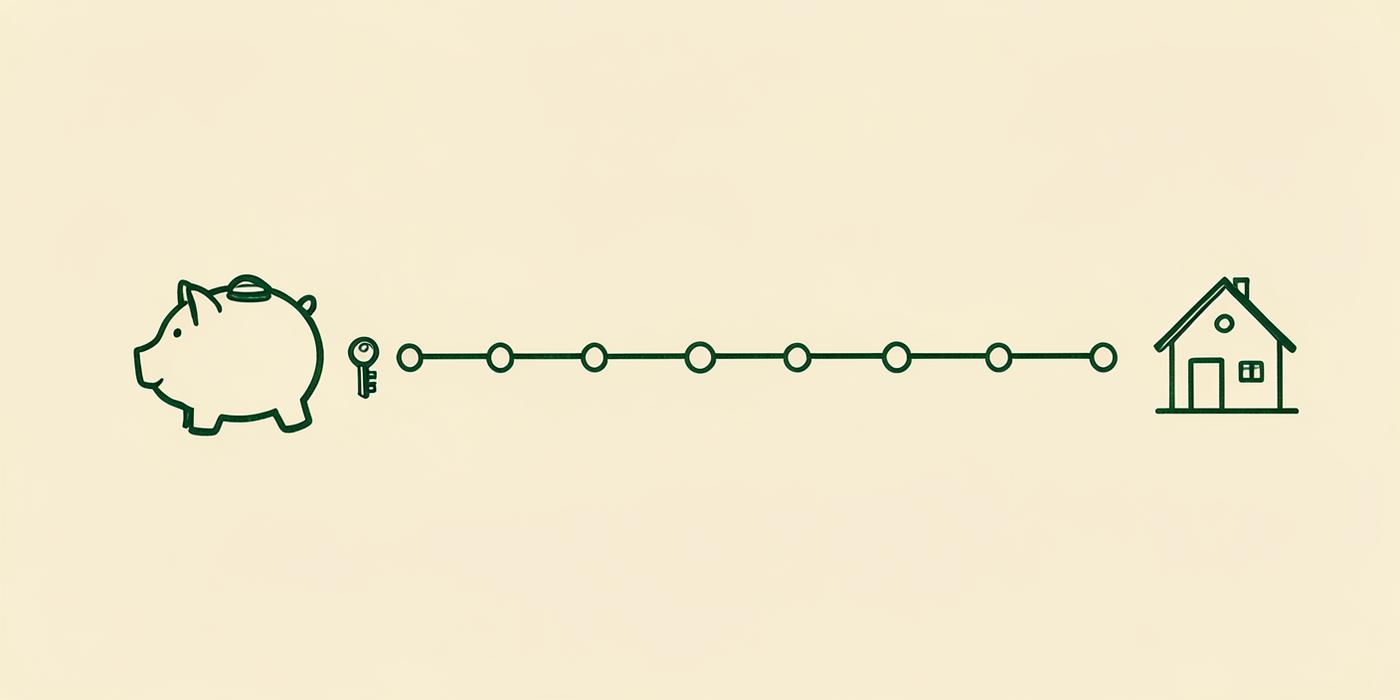
People underestimate how long this takes. A common mistake is to assume that because a friend bought in six weeks, everyone can. That friend was probably further along than they let on, or got lucky with a property that ticked every box.
A more realistic view breaks the journey into phases. Timelines vary enormously, so treat these as a sense of shape rather than a schedule.
Phase 1: Getting your head and your numbers right
This is where you decide you're serious, look at your savings and spending, and start to understand what you can realistically aim for. For some people this phase is quick because they've already been saving for years. For others it's the longest part, especially if you're starting from a small deposit. A few months to a year or more is common.
Phase 2: Getting finance ready
Gathering documents, talking to a broker or a lender, getting an indication of borrowing capacity, and understanding your credit position. This can take a few weeks if your paperwork is tidy, or longer if you need to clean up your credit file or wait out a probation period at work.
Phase 3: Searching
Building a shortlist, attending inspections, reading Section 32s, and learning to read an area. This is the most variable phase. Some buyers find the right place within a month. Many take three to six months, and some take a year or more because they're learning what matters to them as they go.
Phase 4: Making an offer and negotiating
From finding the place to having an accepted offer can be a single afternoon at an auction, or a few weeks of back and forth in a private treaty sale.
Phase 5: Settlement
In Victoria the standard settlement period is usually 30, 60, or 90 days from the contract date, though it's negotiable. During this window your conveyancer does the legal work, your lender finalises the loan, and you arrange insurance and move logistics.
Add it all up and a buyer starting from scratch might take a year or two from "I think I want to buy" to keys in hand. A buyer who's already saved and finance-ready might do it in three to six months. There's no right answer, but going in with realistic expectations saves a lot of stress.
Buy now or wait, a balanced way to think about it
This is the question everyone wants answered, and the honest answer is that nobody can predict where prices are going. Anyone who tells you they can is selling something. What you can do is think through the trade-offs in your own situation.
The opportunity cost of waiting
Every month you wait, you pay rent. Over a year or two that adds up. You also miss out on any growth in the property's value while you wait, though that growth is never guaranteed and properties do fall in value sometimes. Waiting also gives you time to save a bigger deposit, which can lower your borrowing costs.
The risk of buying at the wrong time
Markets move in cycles. Buying near a peak and needing to sell a year or two later can mean selling for less than you paid, which is painful. The longer you plan to hold a property, the less timing matters, because you have more time to ride out any dips. If you might need to sell within a few years, that's a reason to think carefully, because the short-term risk is higher.
A framework, not a forecast
Rather than asking "is now a good time to buy?", a more useful question is often "am I personally ready, and does buying now fit my life and finances over the next five to ten years?". If you're settled in your work and relationships, you've got a deposit and a buffer, and you plan to stay put for a while, timing matters less. If your life is in flux or you might need to move soon, waiting has real value regardless of what the market does.
Are you actually ready? A self-assessment
This isn't a test you pass or fail. It's a set of readiness signals to help you see where you're strong and where you might want to focus before diving in. None of these are requirements, they're things to weigh.
- Stable income: you've been in your role or industry for a while, and you're not on a fixed-term contract that ends soon.
- Savings habit: you've been putting money aside consistently, not just in a lump sum from a gift or a bonus.
- A buffer beyond the deposit: some buyers keep a few months of expenses separate so an unexpected bill doesn't derail things.
- Credit in reasonable shape: no recent defaults, and you haven't made a string of credit applications in the last few months.
- Life stability: you're not expecting a major move, career change, or other big upheaval in the near term.
- Clear on why: you know roughly what you're looking for and why you want to own, not just "because it's time".
- Room in the budget: you've looked at what repayments, rates, insurance and maintenance would actually cost, and they fit.
If most of these ring true, you're probably in good shape to start the process. If a few are shaky, that's not a reason to give up, it's a map of where to put your energy first. Chapter 2 digs into saving and budgeting, which is often the place to begin.
Figures correct as at September 2026. Always confirm current amounts and thresholds with the State Revenue Office Victoria or a licensed conveyancer before relying on them.
The rest of this guide gets into the detail. Take it at your own pace, use the readiness quiz to see where you sit, and come back to chapters as you need them. There's no prize for rushing.
Quick knowledge check
1. Do you need a 20 percent deposit to buy a home in Victoria?
2. Which of these is the most accurate about renting?
3. Roughly how long can the journey from deciding to buy to getting the keys take?